Nvidia and SK Group Close $500 Billion Deal for Chips and Cloud
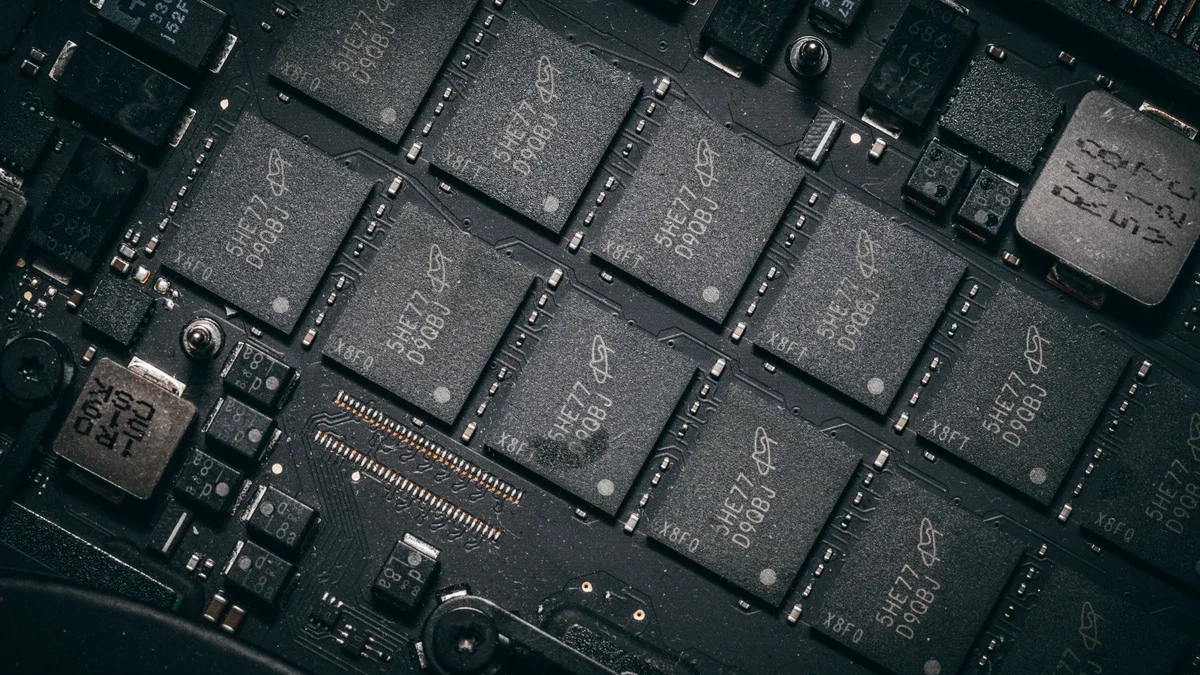
Jakub Pabis / Pexels
In a major and decisive step toward commercial and physical integration that consolidates global infrastructure for massive data analytics workloads, US designer Nvidia and South Korean industrial conglomerate SK Group have officially announced a broad strategic partnership. The estimated total value of the deal exceeds five hundred billion dollars.
Priority Supply of SK hynix HBM Memory
The primary focus of the long-term corporate pact is to secure the physical semiconductor production chain. Under the established contract, memory division SK hynix will allocate a large portion of its manufacturing capacity to exclusively supply next-generation high-bandwidth memory (HBM) chips for hyperscale supercomputing platforms. This high-performance input is critical for the fast operation of intelligent clusters performing complex simulations.
The alliance ensures a continuous supply of ultra-high-speed integrated silicon memory for Blackwell hardware architectures and future lines based on the Vera Rubin platform. Joint engineering cooperation mitigates potential bottlenecks and blockages in the global assembly supply chain arising from the extremely high demand for data-agency processors and cloud servers driving the market.
AI Mega-Factory with Two Gigawatts Capacity
In addition to priority supply of physical silicon inputs, the partnership establishes the joint construction of a mega-factory for processing and data based on SK Telecom's corporate AI cloud. The server and graphics accelerator complex will have a monstrous capacity of up to two gigawatts of electrical power to sustain the logical calculations and analyses of partner computers.
The supercomputing center will use the latest-generation Vera Rubin DSX platform to efficiently interconnect thousands of analytical chips in real time. The robust physical infrastructure will provide massive processing power to train and run hyperscale language models for public agencies and large international corporations in the Asian market and the Western trade bloc.
Competitive Capex Dispute in Data Centers
The massive corporate deal serves as a direct counterbalance to the demand and physical infrastructure plans of rivals. The expanded silicon capacity offering helps Meta and other data providers foster and reduce network bottlenecks in the United States and Europe, breaking the service monopoly held by Microsoft, search engine Google, and the computing networks of developer OpenAI.
High-Speed Network Switches and Stable Buses in Data Centers
Orchestrating massive, high-performance traffic in the two-gigawatt complex of servers and HBM memory requires stable physical connections and ultra-high-fidelity fast optical network switches. The fast traffic of these analytical networks depends on processors and optical switches designed by specialized physical network designers, such as semiconductor manufacturer Broadcom. The lowering cost of local optical switches reduces the electrical consumption of partner companies' computers.
The availability of new hardware resources will guide infrastructure in the coming years. Advanced silicon technology will dictate the development speed of new frontier AI models in global commerce.
This content was created and reviewed by our team (iatoskill.com), if you find any issues, please reach out to us