US Demands Tech Giants Fund Their Own Energy for AI Data Centers
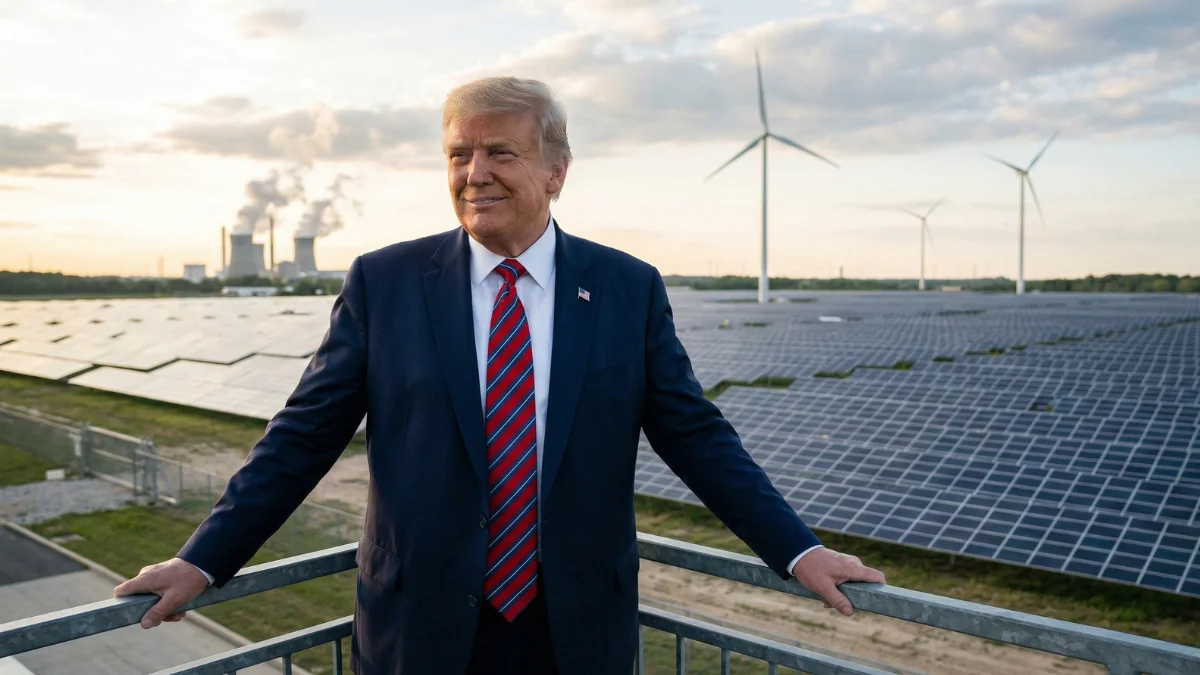
Recently, the President of the United States (Donald J. Trump) announced that the world's largest tech companies will be responsible for the energy needed to operate their massive AI data centers.
The list includes names like Amazon, Google, Meta, Microsoft, OpenAI, xAI, and Oracle. The proposal is for these companies to independently generate or secure all the electricity consumed by their AI-dedicated infrastructures.
What's the motivation behind this decision?
AI data centers consume massive amounts of energy. Training and operating advanced models, such as virtual assistants, recommendation systems, and automation tools, require thousands of high-performance chips running 24/7.
This growing consumption has begun to strain the American power grid. In some regions, authorities have warned that the rapid expansion of processing centers could impact supply and even increase electricity bills for the public. The aim of this decision is to prevent AI's growth from affecting American citizens' wallets.
If the agreement is formalized as announced, companies will need to:
- Build their own energy sources
- Establish dedicated supply contracts
- Invest in independent generation, such as solar, wind, or even nuclear
- Ensure their growth doesn't overwhelm the public grid
In practice, this pushes Big Tech into a new role: beyond software and technology firms, they become major investors in the energy sector.
A single large data center can consume energy equivalent to a medium-sized city. Now imagine dozens of them operating simultaneously, training ever larger models.
Artificial intelligence demands three things on an industrial scale:
- Processing
- Cooling
- Constant energy
Without stable and abundant electricity, cutting-edge AI simply doesn't exist.
Political strategy or real necessity?
Analysts point out that the decision mixes pragmatism with political strategy. On one hand, the government signals consumer protection, avoiding tariff increases; on the other, it pressures tech giants to internalize the full cost of AI's explosion.
There's also an important side effect: by requiring companies to invest in their own generation, the country might accelerate private energy infrastructure projects.
“Robots controlling their own energy?”
On social media, the narrative has taken a "concerning" tone, as if we are heading towards a scenario where artificial intelligences control their own energy sources.
In practice, that's not what's happening. AIs aren't taking over plants; what's changing is the economic model: tech companies will directly fund the infrastructure that supports their systems.
Still, the symbolism is strong. The era of artificial intelligence doesn't just depend on code and algorithms; it depends on electricity, a lot of electricity.
This content was created and reviewed by our team (iatoskill.com), if you find any issues, please reach out to us